


No-code is dead. What’s next?
Appfarm CEO Marius Tuft opened Developalooza 2026 by calling time on the category the company grew up in. AI is now the fastest way to get a first version built, but building the first version takes a day, and someone has to keep the app running, secure and up to date for years afterwards. The first recap in our series from the day.
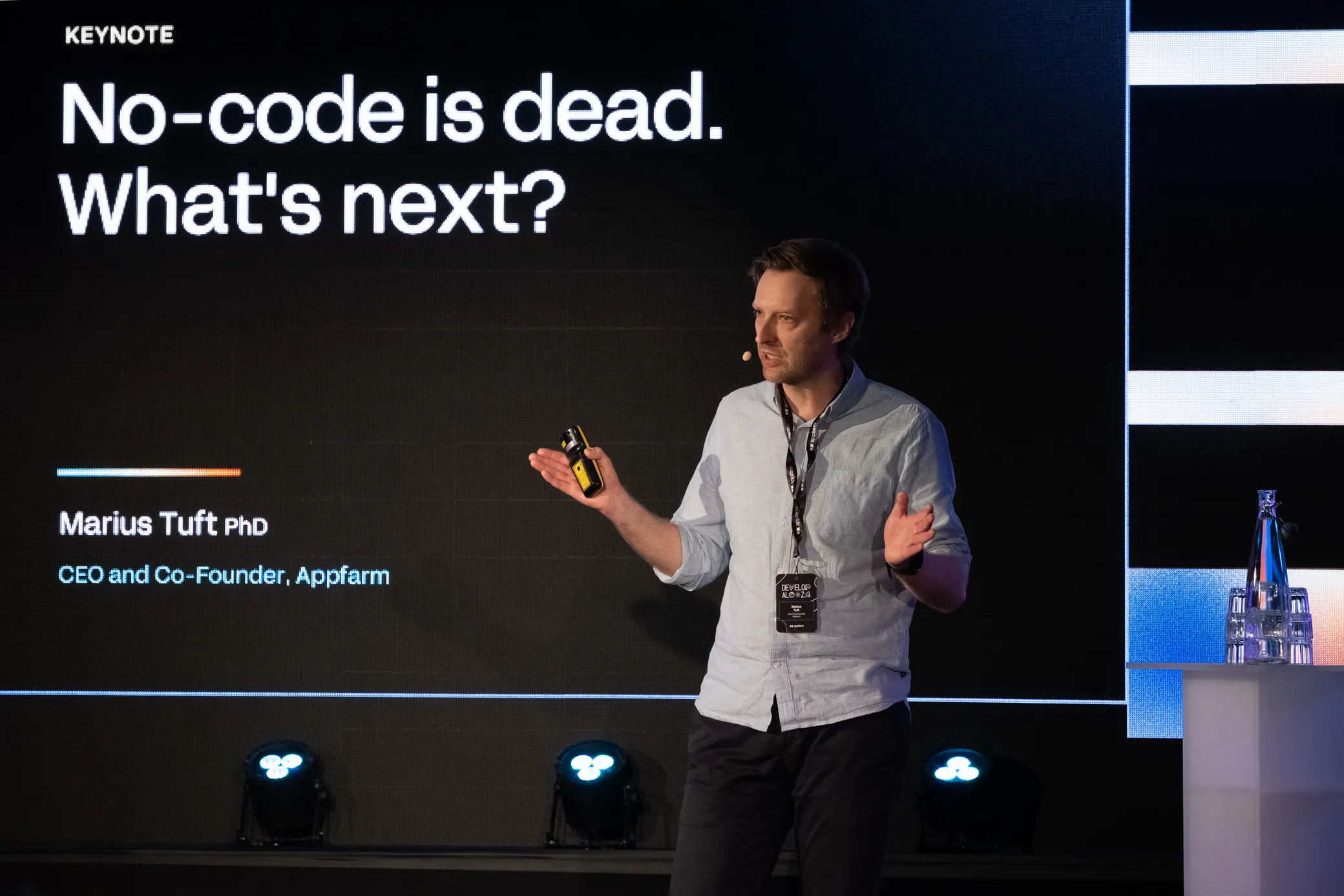
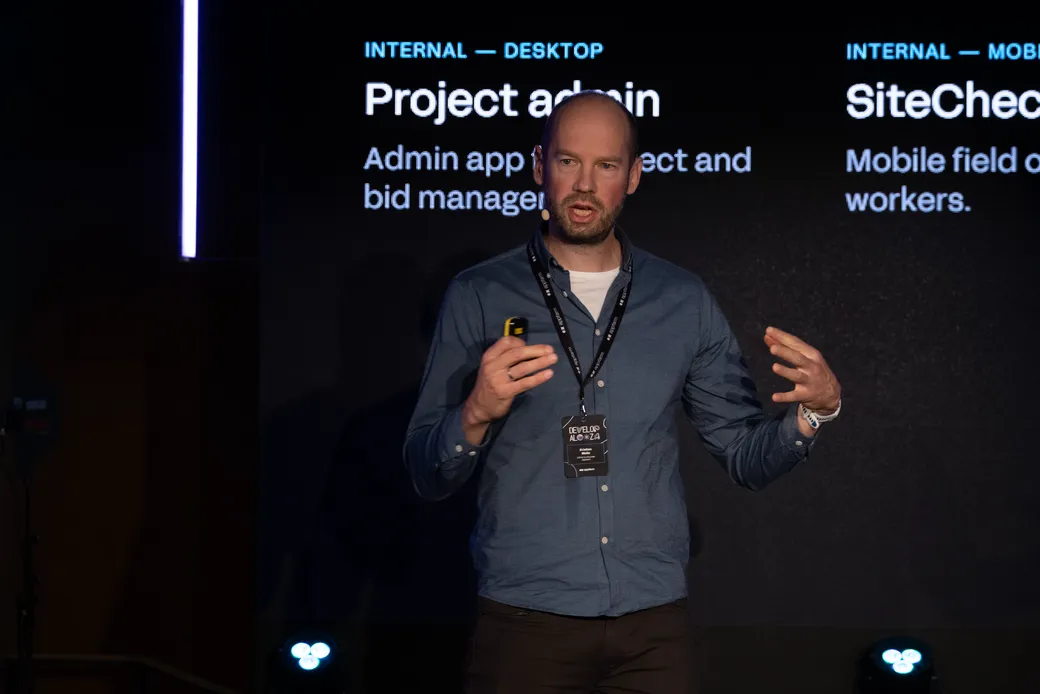
Developalooza 2026, Rebel, Oslo. Opening keynote by Marius Tuft, CEO and co-founder of Appfarm.
Marius opened Developalooza 2026 by calling time on the category we have sold into for almost a decade.
Visual development did not stop working. AI is simply the fastest way to get a first version built now. But building the first version takes a day, and someone has to keep it running, secure and up to date for years afterwards.
Gartner was right, just not in the way anyone expected
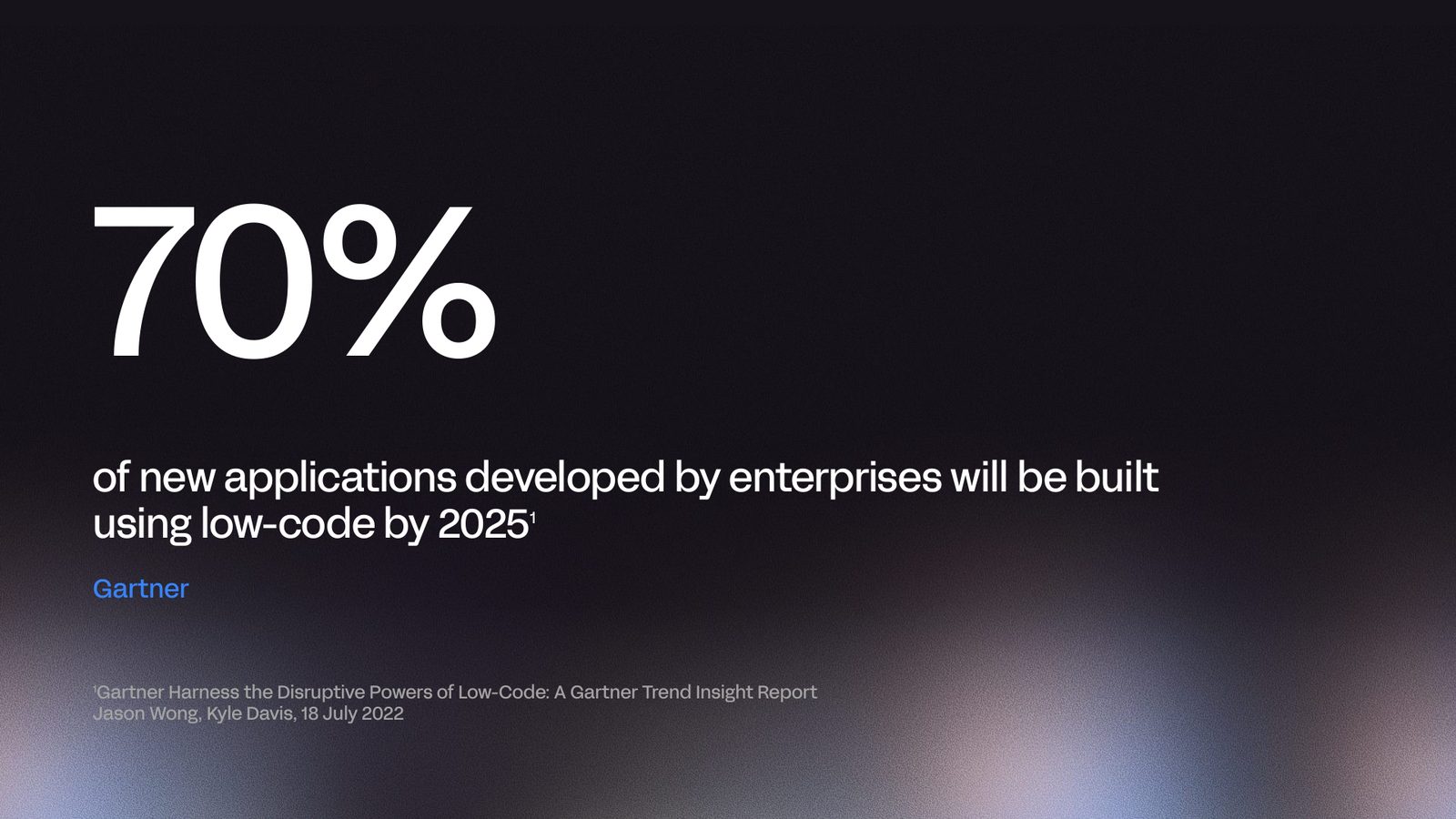
Back in 2022 Gartner said 70 percent of new enterprise applications would be built with low-code by 2025. We quoted this and similar forecasts in our decks for years, and so did everyone else in this market.
Marius thinks it came true, but not in the way Gartner predicted. His estimate is that around 70 percent of the software built in 2026 was not written by a human being. Visual development is not what got the industry there. AI is.
In the very beginning we were wrong about what people wanted
Appfarm was founded on two ideas. The first was that anyone should be able to build software quickly and simply. The second was that owning software should not require a small army and a big budget.
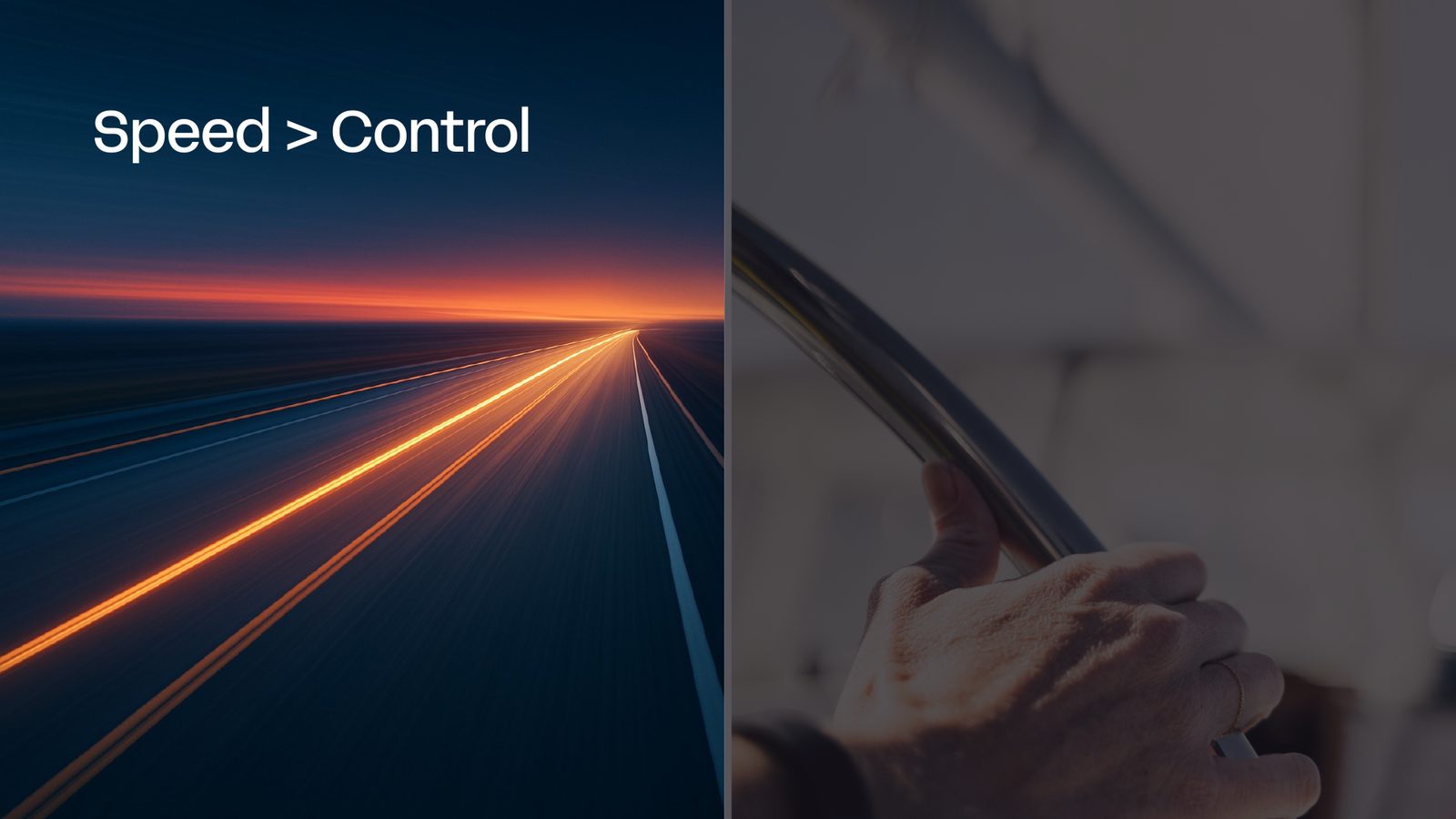
The five founders were convinced the second one was the real prize, because keeping software alive is hard. Then the company went to market and found out that almost nobody was responding to that. They were looking for speed. Building software used to be slow and expensive, so being fast was the part that made people sit up.
The market had a point. The ownership story only means something once there is software to own, and building always comes first.
Then the way into software changed
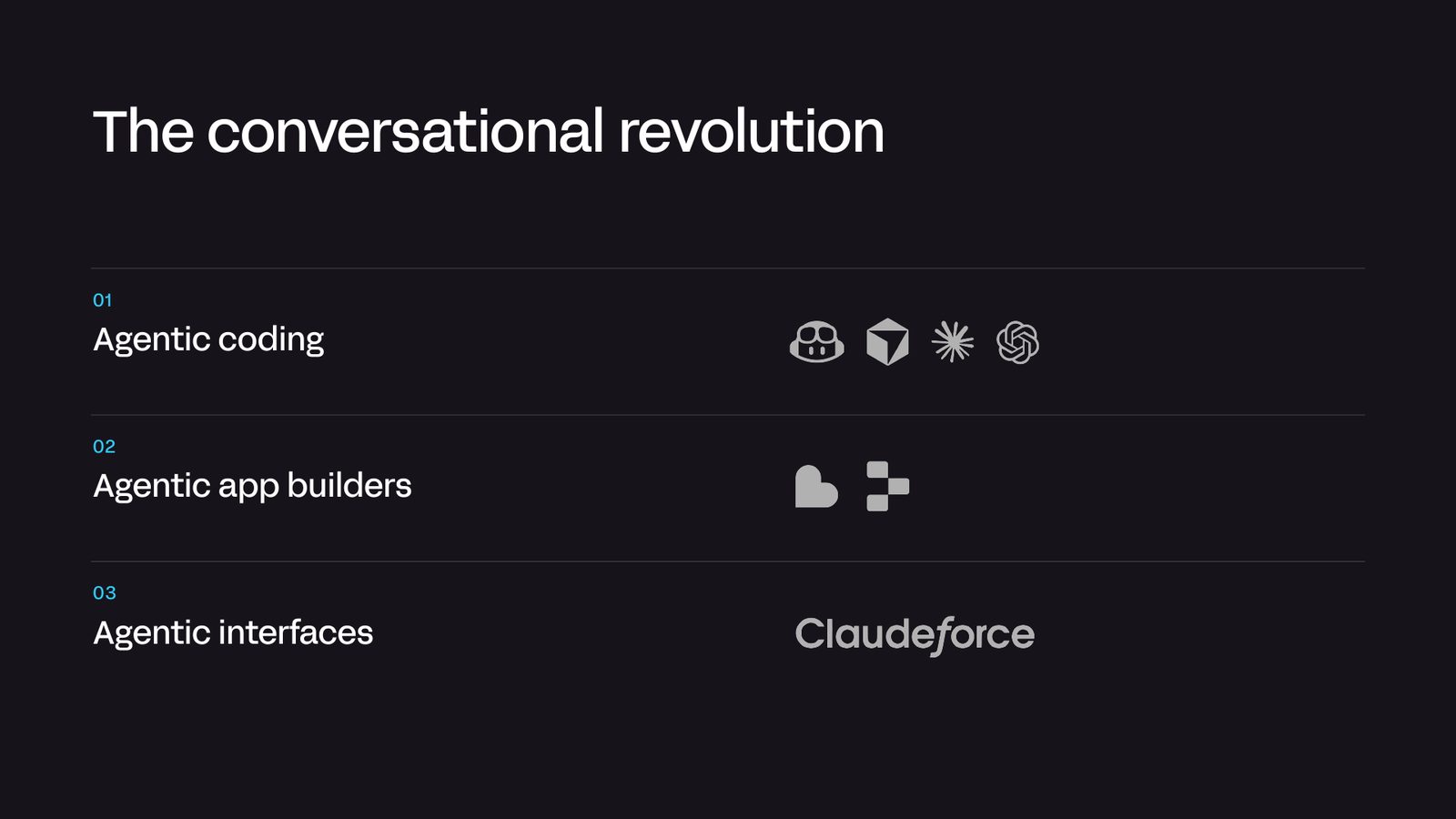
Large language models arrived on the scene and proved to be very good at writing code, and agents worked their way into how software gets built and into the products themselves. Marius sorted it into three layers: agentic coding, agentic app builders, and agentic interfaces, with Claudeforce, the Salesforce and Anthropic partnership, as his example of that last one.
Software now starts with a conversation, and you can keep iterating until it is right.
That difference will be obvious to anyone who has worked with a low-code or no-code tool. These tools, even at their best, still asked you to learn something. You had to sit down with the product and get good at it. A conversation asks nothing of you. You can just start typing. In about eighteen months that pushed straight through a ceiling the rest of the industry had been pressing against for a decade, and a huge number of people who were never going to be builders became builders.
That is what Appfarm AI is for. Chat makes the opening move, because it is the fastest and most forgiving way in. The canvas is still underneath as a governance layer, and it is at its best once you are already up and running, not when it’s blank.
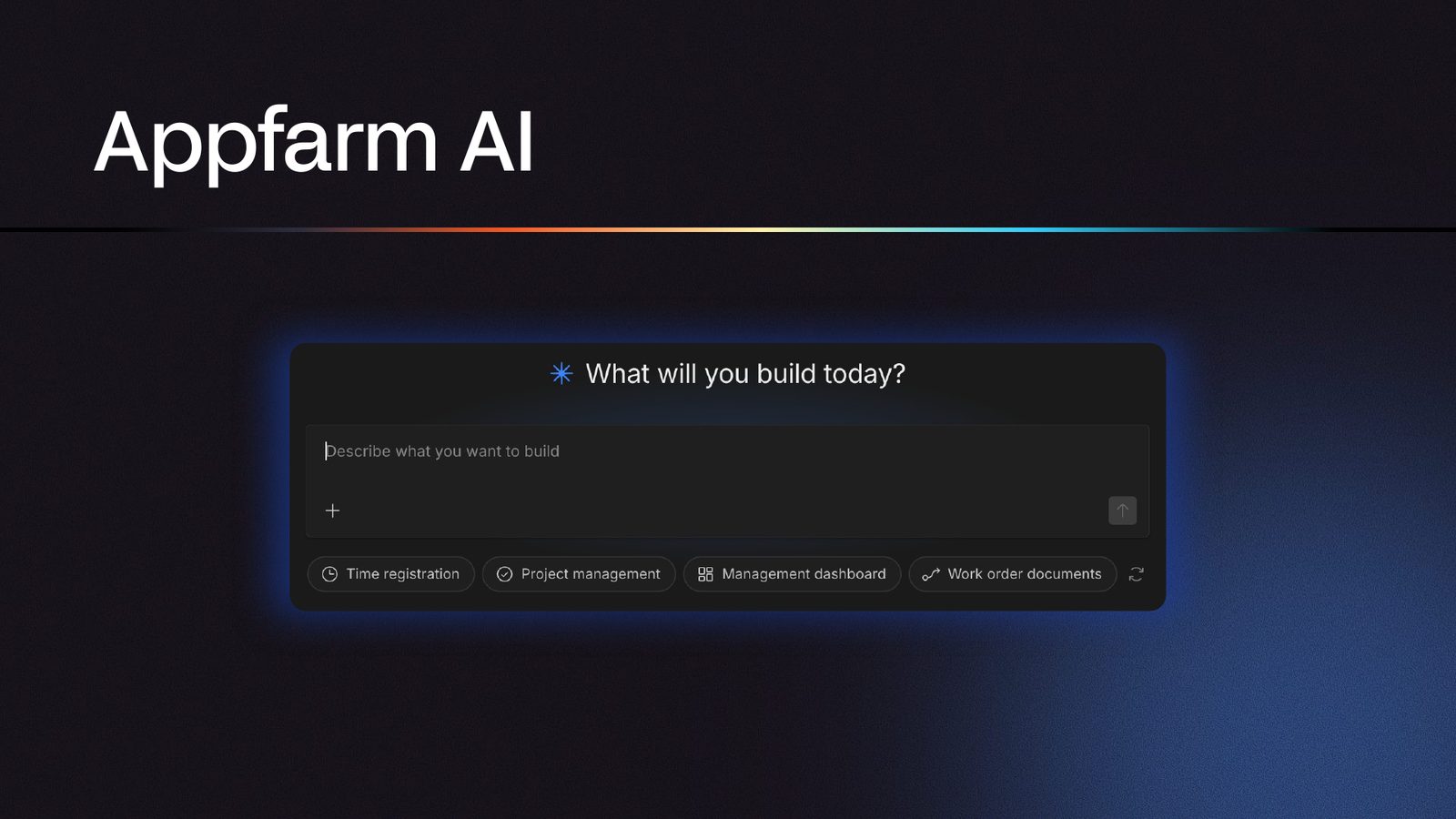
Day one is sorted. Day two is not.
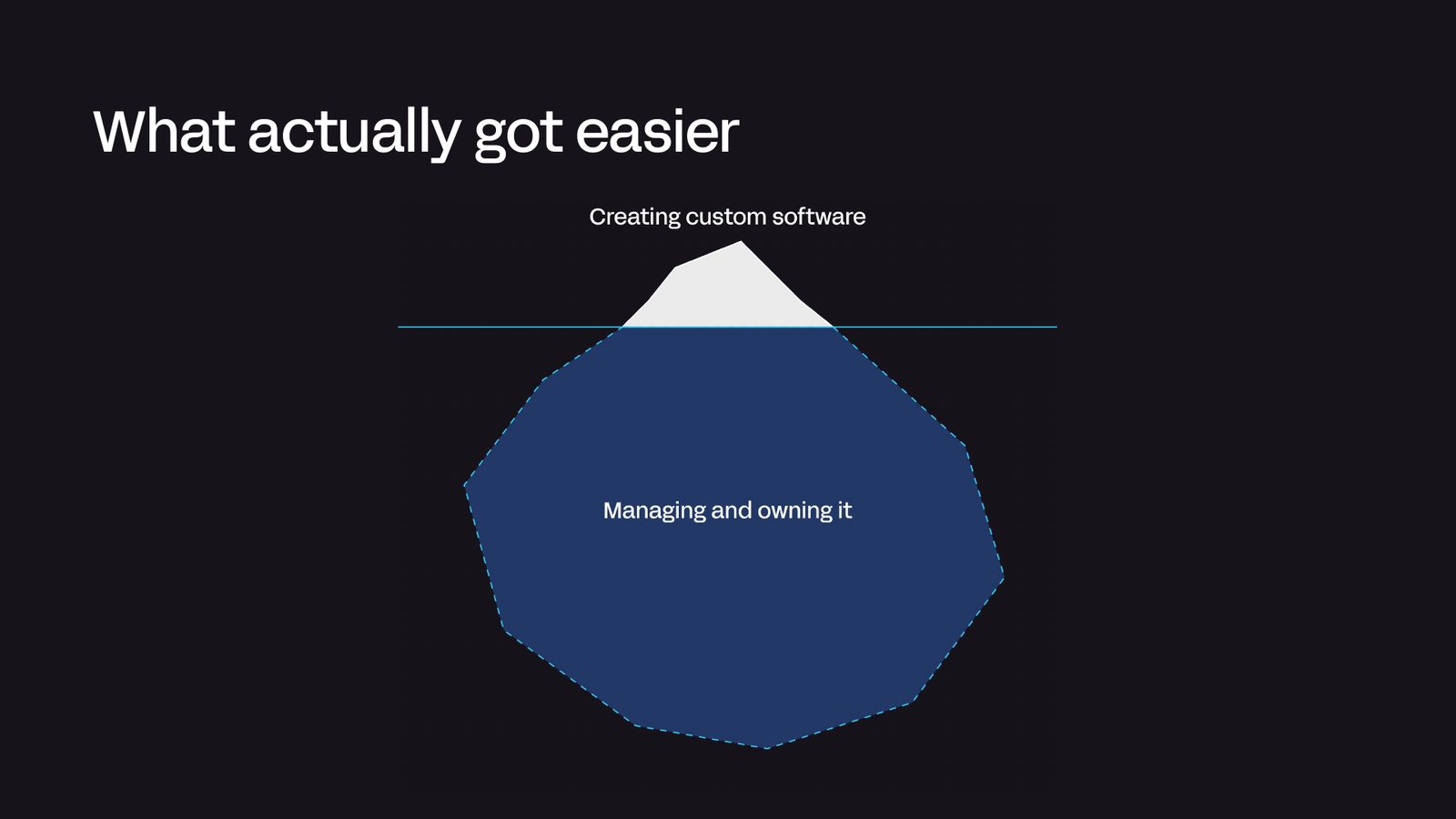
Getting a first version out has never been easier. Living with it afterwards is exactly as hard as it always was. The moment something is in production, people depend on it, and that brings responsibility that no LLM takes off your hands. If anything it has got worse, because there is far more software out there now than there used to be.
Everyone assumed building was the bottleneck. It turns out building was the easy bit.
What no-code was really for
“No-code” as a word might be dead, but not the idea behind it.
No-code was a way of describing a world where writing code was the thing standing in your way. That is no longer true, so in a sense everything is no-code now. What is worth keeping is the idea sitting underneath the label. The building blocks you dragged around the canvas were never really about dodging code. They were about dodging the code lifecycle.
But isn’t there an obvious comeback? I can just chat to Claude. Completely true. And then you own the database and storage, authentication and permissions, hosting and deployment, cloud and compute, CI/CD and version control, and the list goes on.
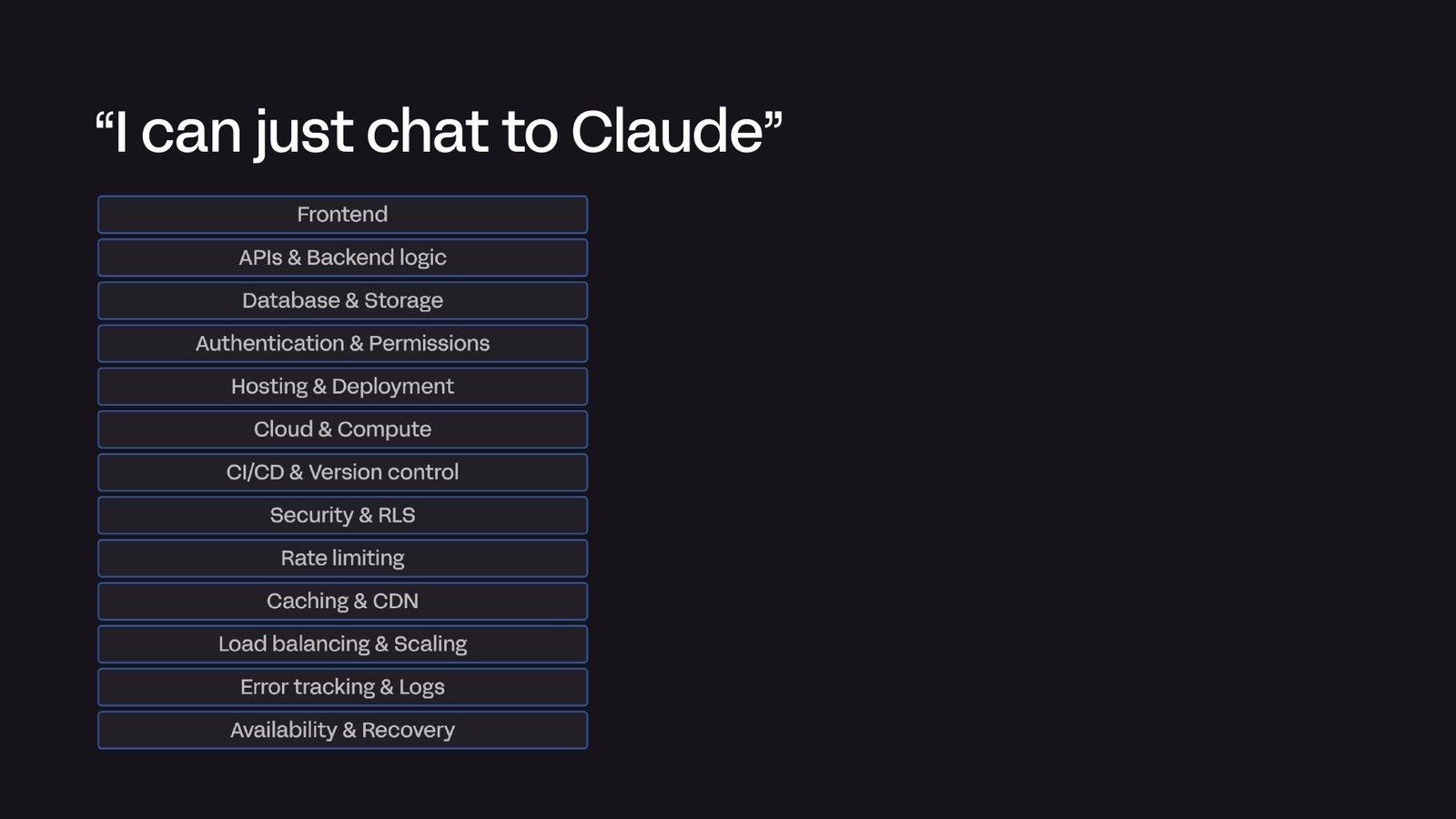
So no, software engineering is not going anywhere. If you have a team that ships production code every day and all of this is their native language, go and build it yourself. That is the right call.
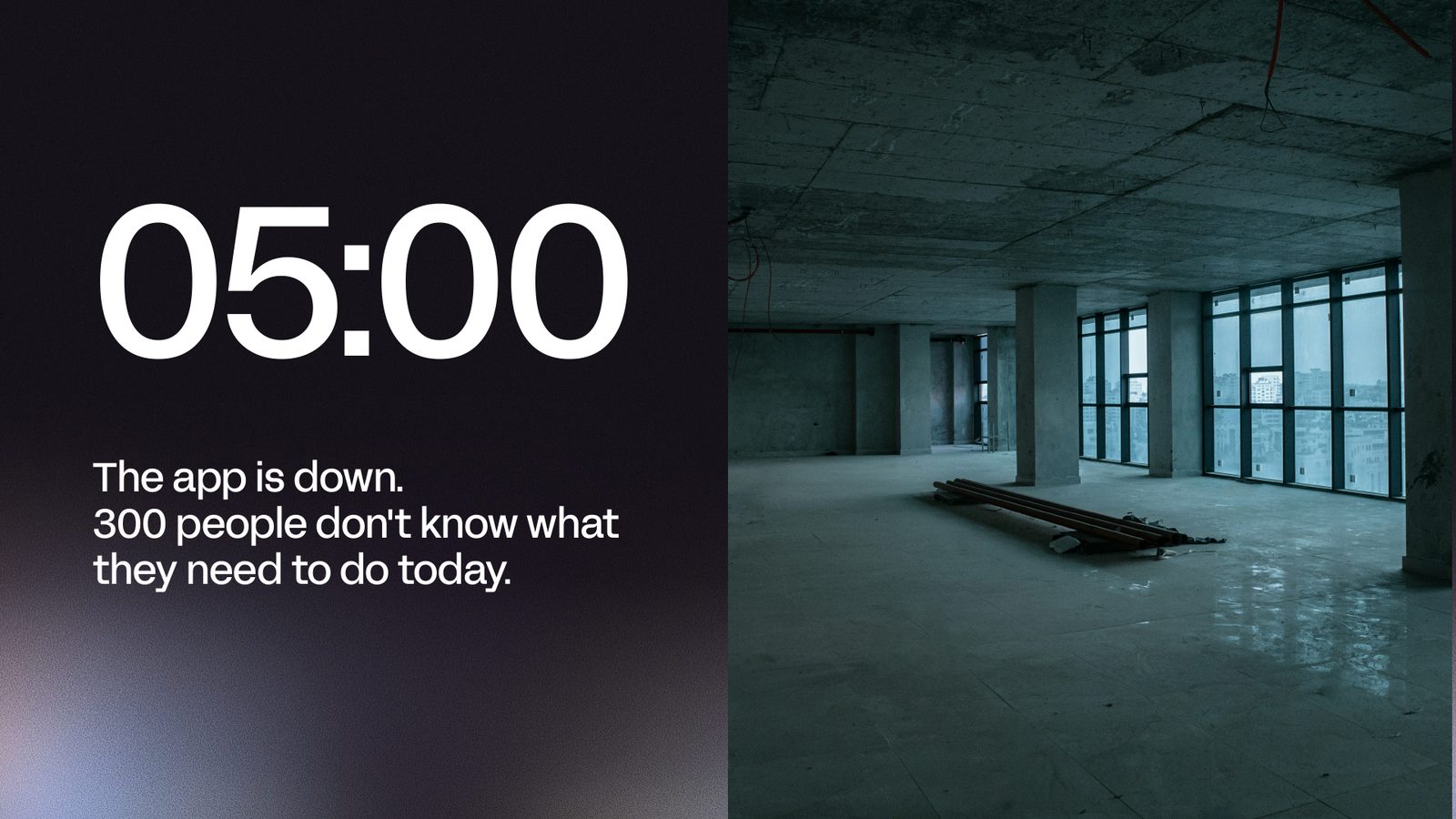
The other version of the story looks different. It is five in the morning, the app is down, and three hundred people have no idea what they are supposed to do today. If reading that made you wince, or you simply don’t want that responsibility, a chat window is not the answer. You need the good vibes on day two and beyond as well, not just on day one.
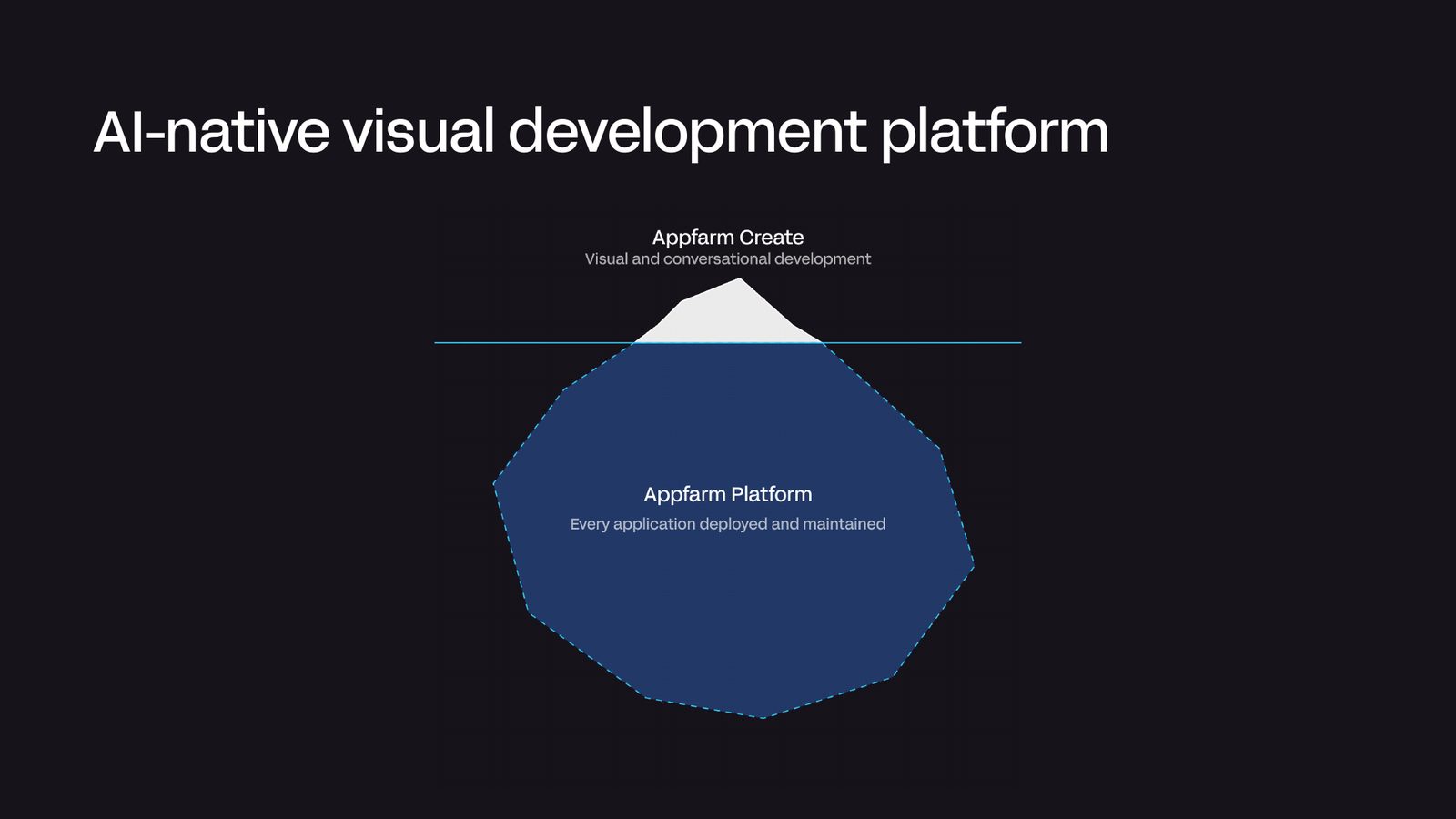
That is where Appfarm shines. Appfarm Create sits above the waterline and is how you build, visually or by talking to it. The platform sits underneath and quietly keeps everything you have built running.
Most companies are not software companies
It is an easy thing to lose sight of from inside the industry. When you work in software and live in AI all day, you forget that is not most people’s life.
Being able to make software is not a reason to make it. If software is not what your company is actually for, this is the moment to have a proper opinion about what you build yourself and what you do not, case by case. Nothing is right for everything.
The bigger question is what AI does once it is inside your business
There’s something else that matters more, though. What AI can do for how your business runs is a much bigger prize than what it can do to help you build. One of our primary jobs as a platform is getting AI into an organization safely, keeping it under control, and putting it behind the work people already do.
As a follow-up, Marius was asked whether apps just disappear once talking becomes the normal way in. His view was that they won’t, but that they will change. Quite often you need to see something to have an opinion about it. Voice is coming, and so is the agentic interface, which is really no interface at all. The simplest apps probably do get replaced by a conversation. The moment you need to make sense of a lot of information at once, you will still want the dashboard.
This is the first of our recaps from Developalooza 2026. Read the rest of the series, or sign up to our newsletter so you don’t miss an invitation to next year’s edition.
More reading

There are no items matching your filters. Please try another filter to view results.
We have a lot of helpful resources. Try another filter or reset the filters to find the resource for you.
Digital transformation without disruption