
Managing autonomous cleaning robots across Norway’s fish farms
Aqua Robotics builds autonomous robots that clean fish farm nets. Their custom solution built in Appfarm provides complete fleet oversight, diagnostic capabilities, and customer access—turning robotic cleaning into a differentiated service with real-time monitoring and proactive maintenance across Norway's aquaculture industry.
Challenge
Aqua Robotics builds autonomous robots that clean fish farm nets—a critical task for maintaining healthy aquaculture operations. These robots operate continuously in challenging marine environments.
The challenge: how do you manage a fleet of autonomous robots deployed across multiple fish farms in Norway?
Each robot needs continuous monitoring. Battery levels, positioning, operational status, cleaning patterns—all of this data streams in real-time from robots working underwater in remote locations. When something goes wrong, response time is critical. A robot stuck in the wrong position or experiencing technical issues can disrupt cleaning operations and affect fish welfare.
Aqua Robotics needed to solve several operational problems simultaneously:
Fleet visibility and control With robots installed across multiple customer sites, each with several cages, they needed a complete overview of their entire fleet. Which robots were operating normally? Which needed attention? What was the status at each farm location?
Proactive maintenance planning Rather than waiting for failures, they wanted to identify issues early through diagnostic data. Patterns in sensor readings could reveal problems before they caused downtime. But this required collecting and visualizing diagnostic data.
Customer communication and service Fish farmers needed visibility into their own robots without overwhelming them with unnecessary complexity. They needed simple status information, the ability to report issues, and a direct communication channel with Aqua Robotics.
Remote troubleshooting and control When issues occurred, technicians needed to diagnose problems remotely and, when possible, resolve them without dispatching service personnel to remote farm locations. This meant having access to detailed diagnostic data and remote control capabilities.
Data-driven product development Every robot generated valuable data about cleaning patterns, environmental conditions, and operational performance. This data could inform both immediate operational decisions and long-term product improvements—but only if properly collected and analyzed.
Traditional IoT platforms and off-the-shelf fleet management systems couldn't address these interconnected needs. Aqua Robotics needed a custom solution that could handle the complexity of their operations while remaining simple enough for fish farmers to use daily.
Solution
Aqua Robotics built three interconnected applications in Appfarm to create a complete operational platform for their robotic cleaning service. All three applications connect to AWS IoT Core, where robot sensor data flows continuously from deployed units at fish farming locations across Norway.
Fleet monitoring portal
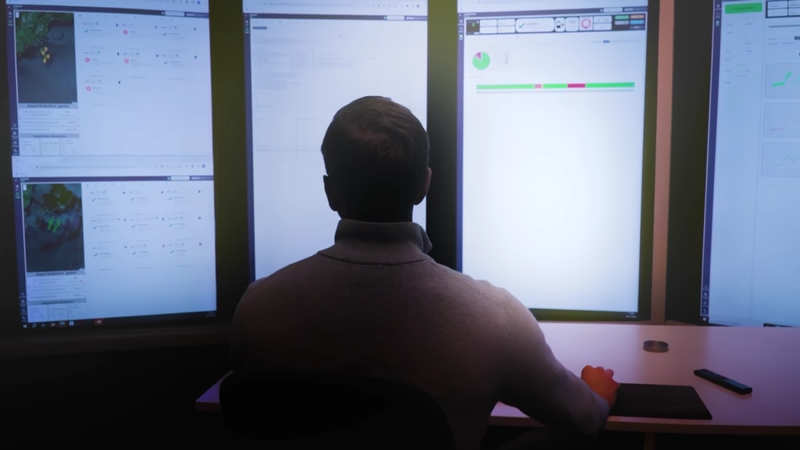
The core application provides Aqua Robotics with complete oversight of their robot fleet. Built for desktop use by operations teams, the portal presents a hierarchical view: companies, farm locations, individual cages, and the robots working in each.
The main dashboard shows real-time status for every deployed robot. Battery levels, current position, operational state—all visible at a glance. Operations teams can filter by location and timeframe to identify patterns and track performance metrics.
Each robot streams sensor data every second. This data appears in multiple formats throughout the portal:
Time series visualization shows what each robot has done over a given period. Was it actively cleaning? Paused due to weather? Experiencing technical issues? The timeline makes operational patterns immediately visible.
3D cage visualization displays robots in their actual working environment. Heat maps overlay the cage structure, showing where cleaning has been most intensive and revealing any problematic areas where robots frequently stop. This helps identify whether issues stem from net conditions or robot performance.
Remote control capabilities replicate the physical control panel found on each robot. If weather conditions change suddenly, operations teams can remotely park all robots at charging stations. They can also restart operations without requiring on-site intervention.
Configuration management allows settings adjustments for each location. Different farms have different net strengths, so maximum pulling force must be configured appropriately. Cleaning intensity varies by depth—nets experience more growth near the surface, so the top zone receives more intensive brushing. All these parameters can be adjusted directly through the portal.
Reporting and analytics generate detailed statistics on uptime, downtime causes (weather vs. technical issues vs. operational stops), and cleaning coverage. These reports inform both internal operations and customer communications.
Integration with Windy weather service provides local forecasts, helping teams anticipate when weather conditions might require pausing operations.
Diagnostics hub for maintenance planning
The second application serves Aqua Robotics technicians with deep diagnostic capabilities. Product technicians use the desktop version for maintenance planning, while field technicians access a mobile version during service calls.
The diagnostics hub provides granular access to sensor data streams. Technicians can examine diagnostic data to identify developing problems before they cause failures. Trend analysis reveals abnormal behavior patterns that might not trigger immediate alerts but indicate components nearing end of life.
A calendar view integrates service scheduling with diagnostic insights. When sensor data suggests a component needs attention, technicians can schedule maintenance proactively rather than responding to breakdowns.
The incident reporting system connects technicians with customers through integrated chat, creating a documented communication trail for each issue.
Customer portal
The third application gives fish farmers direct access to their own robots through mobile devices. Built for simplicity, it shows only the information relevant to daily farm operations.
Farm managers see status overviews for their robots: operational, charging, or requiring attention. They can view current sensor data, check weather forecasts that might affect operations, and access simple performance dashboards showing cleaning coverage.
The customer portal includes the same chat functionality used in the diagnostics hub, creating direct communication channels with Aqua Robotics support. Farmers can report issues and receive updates without phone calls or separate ticketing systems.
Role-based access controls ensure each customer sees only their own robots and locations, while Aqua Robotics teams maintain visibility across the entire fleet.
Technical foundation
All three applications connect to the same AWS IoT Core infrastructure where robot data streams continuously. This shared foundation means information flows consistently across applications—a diagnostic insight visible to technicians appears in the customer portal when relevant, and status changes made in the fleet monitoring portal reflect immediately across all views.
The applications handle the complexity of managing robots that operate in harsh marine environments with limited connectivity, while presenting clean, focused interfaces for different user roles.
Results
The Appfarm platform became the operational backbone of Aqua Robotics' business. What started as an internal need for fleet visibility evolved into a customer-facing service that differentiates their product offering in the aquaculture market.
Complete operational oversight
Aqua Robotics now has real-time visibility into every deployed robot across Norway's fish farms. Operations teams can identify issues immediately, understand fleet-wide patterns, and make informed decisions about resource allocation. The 3D visualization capabilities help identify environmental factors affecting performance, leading to both immediate operational adjustments and longer-term product improvements.
Proactive maintenance and reduced downtime
Rather than waiting for robots to fail, technicians now spot developing issues through diagnostic data analysis. They can plan service visits efficiently, ensuring proper parts and expertise arrive on-site the first time. This proactive approach keeps robots operational and reduces emergency service calls.
As Atle Haugland, Chief Operations Officer at Aqua Robotics, explains:
"With Appfarm, we've been able to create a complete overview of our robotic fleet and cleaning operations. We stay in control of all robots installed in our customers' fish farms, we can plan and carry out maintenance, and we can collaborate effectively with our customers."
Simplified customer collaboration
The customer portal transformed how Aqua Robotics works with fish farmers. Instead of phone calls and email threads, issues get reported and resolved through the platform. Farmers can check robot status themselves, reducing routine inquiries while creating clear communication channels for genuine problems.
Eirik Bjørnestad, Farm Operations Manager at MOWI (one of Norway's largest aquaculture companies), describes the impact:
"With Aqua Robotics' portal solution, we can easily identify problems and errors ourselves and resolve them as part of our day-to-day routines."
Data foundation for continuous improvement
Every robot operation generates data that flows into the platform. Sondre Sagstad, Software R&D Manager at Aqua Robotics, highlights this value:
"Appfarm makes it easy to retrieve, consolidate and visualize the data we need to get a solid overview of the current status and historical data—with trends, patterns, flagging of abnormal behavior, and more. We can also share insights with our customers through the portal."
This data informs product development decisions, helps optimize cleaning algorithms, and reveals how robots perform under different environmental conditions. The platform creates a continuous feedback loop between deployed robots and product development.
Operational platform as competitive advantage
The Appfarm applications became integral to Aqua Robotics' product offering, boosting customer satisfaction and simplifying logistics operations.
Fish farmers don't just buy robots; they get a complete monitoring and management solution that integrates with their daily operations. This service layer built in Appfarm helps Aqua Robotics maintain strong customer relationships and gather the operational insights that drive continuous improvement.
The platform handles the complexity of managing autonomous robots in challenging environments while keeping the experience simple for everyone involved—from operations teams to field technicians to fish farmers checking status on mobile devices between other tasks.
In Brief
Company
Aqua Robotics
Industry
Aquaculture
Location
Norway
Use case
Fleet management and customer portal for autonomous net-cleaning robots
Appfarm solution
Three interconnected Appfarm applications providing real-time fleet monitoring, diagnostic capabilities, and customer access. The platform consolidates IoT sensor data from robots deployed across multiple fish farming locations, enabling remote monitoring, control, and maintenance planning for both Aqua Robotics and their customers.
Key results
- Real-time monitoring and diagnostics across entire robot fleet
- Proactive maintenance based on data-driven insights
- Simplified logistics and maintenance planning operations
Developed by
Aqua Robotics


Learn from other industry leaders
Dive into in-depth examples of business applications developed by enterprises in different industries.
Discover how innovation leaders are achieving digitization without code, through real examples of applications custom-built to their specific needs.