


Mowi: Opening a salmon operations system to AI
Mowi produces almost ten million meals of salmon a day. Together with Avo Consulting they built AquaOps, a unified digital experience that replaced Excel, paper and manual communication, and MCP is how they are now opening it to AI.
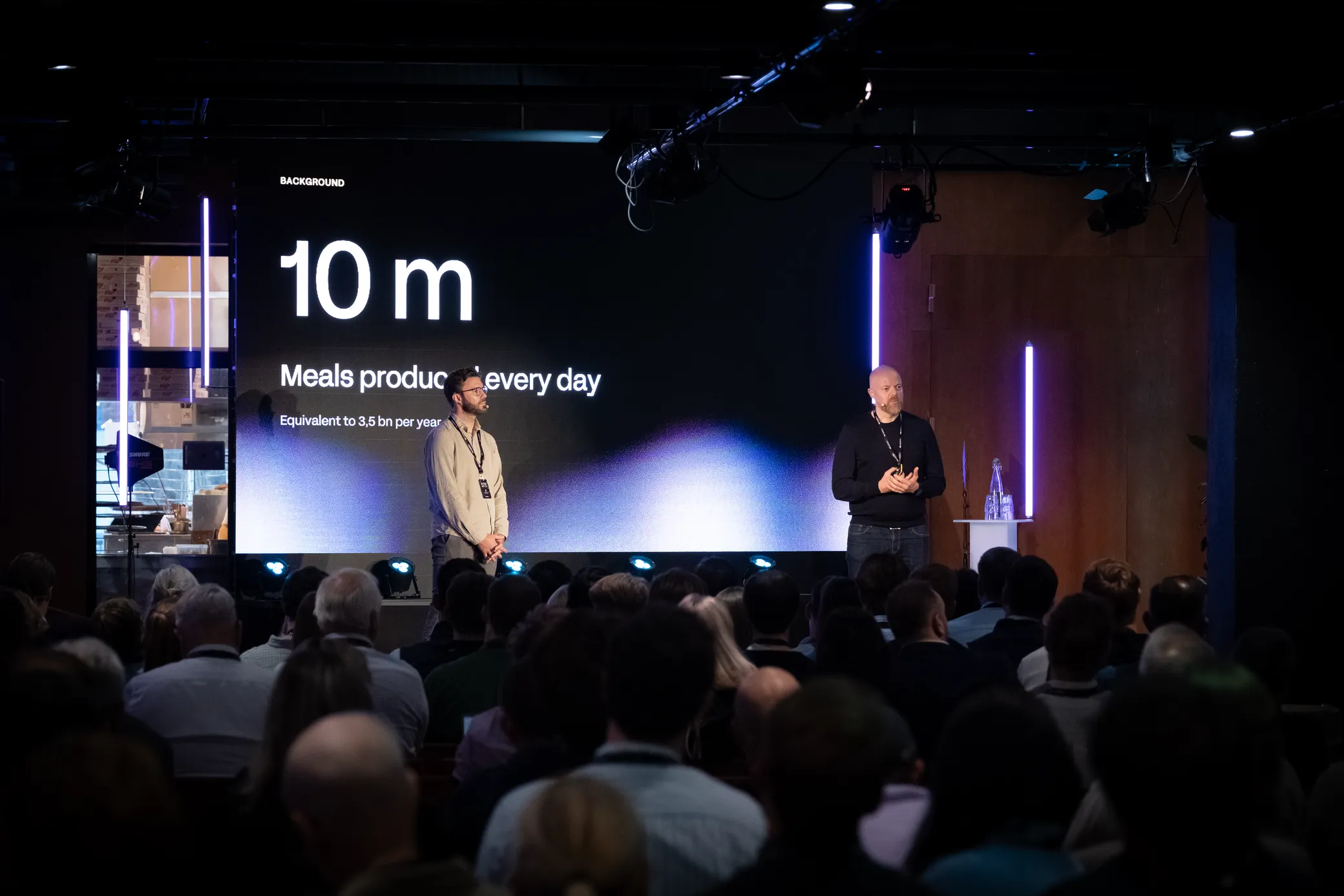
Developalooza 2026, Rebel, Oslo. Customer story from Eric Nordvik, Apps and AI development manager at Mowi, with Stian Bøe of Avo Consulting, who has worked with Mowi for two years.
Mowi is the largest producer of Atlantic salmon in the world, with about a fifth of the global market. It covers the whole chain, from making the feed and producing the roe through to harvesting, processing and selling the fish. The head office is in Bergen, it operates in 26 countries and employs around 12,000 people. In Norway alone it runs 180 fish farming locations, which produce 60 percent of its salmon.
Added up, that is almost ten million meals a day, or 3.5 billion a year. Eric Nordvik’s comparison was McDonald’s, at around 2.5 billion burgers a year, and his other way of putting it was that Mowi could feed the whole of Norway twice a day, all year.
One way of working across every site
The difficulty is where the work happens. Fish farms are not near cities. They sit along the coast in remote places with bad weather, and every operation has to be planned around that. Fish have to be moved, which means vessels have to be coordinated, out to the sea and back to the production plants.
Mowi has been producing salmon since the 1960s, and that coordination ran on a mix of Excel and paper, with the detail shared over Teams and SharePoint. Together with Avo Consulting they built AquaOps, a unified digital experience that gives every site the same way of working.
What AquaOps does
AquaOps is Mowi’s central operations management system, built on Appfarm with Avo Consulting. It covers vessel operations, logistics and the movement of fish, welfare including assessment and treatment, and service on boats, pens and equipment.
The vessel plan is the main view, with boats down one side and operations across the middle, filterable by region and by operation type such as treatment, sorting, smolt, harvest and service. Opening an operation gets you the detail behind it: the plan itself, a communication log, a map of the pens, a shift plan, and a safety assessment that has to be completed before any fish are moved.
Where MCP comes in
Stian Bøe’s framing was that the optimization potential with AI is huge, but only on top of controlled processes and good data. With that foundation in place, Mowi exposed AquaOps to AI through MCP, the Model Context Protocol, so the system can be queried and acted on through a chat interface.
The demo ran ChatGPT beside the vessel plan on development data, framed around a site manager who is out at a location with nothing but a phone.
First, a question: are there any requests at this site I need to follow up? It goes into the data model and comes back with two. Then an instruction: create a service operation for that request, three days, find a suitable vessel, put it in next week. It reads the vessel plan, finds the space, and creates the operation. Refresh the plan and it is there with the right data on it.
Then a voice note, recorded as if standing at the pen. He was looking from the north side, there were some algae, it otherwise looked fine. He asked for it to go into the communication log, and refreshing the operation showed the entry under his name, timestamped, almost word for word.
The last request was heavier: a report ranking vessels on sorting performance, as a top ten, which means walking a lot of objects and doing real calculation. It ran for a while and then produced a file, then a chart when he asked for something more visual, then a daily schedule when he asked for it to run at eight every morning and land in his chat.
Foundation first
Stian’s takeaways came in order. A strong data model and data people trust, because as he put it, they know their own data, so the AI knows it too. Then well defined workflows, which give the AI the structure and context to work inside. Only then MCP endpoints, which take minutes to build once the first two exist, and which is where the real value starts.
The first question afterwards was what automated process they are most looking forward to finishing. Stian’s answer was that he has started testing whether he can automate Eric’s analytics work through MCP rather than building the interfaces for it.
Stian and Eric were then asked whether all of this makes analytics investment redundant, given you can now put MCP on top of everything. The answer was that it changes rather than disappears. Eric had been building an analytics dashboard, which is where the idea for the MCP example came from. He expects plenty of cases that no longer justify pouring money into Power BI, while still wanting the visual answer at the end of it.
Stian was also realistic about trust. The chat interface is not live across the organization yet. His expectation is that people may be a little wary if the same question produces a slightly different graph on consecutive days, and that consistency will matter more than a fresh report every time.
Part of our series of recaps from Developalooza 2026. Read the rest of the series, or sign up to our newsletter so you don’t miss an invitation to next year’s edition.
More reading
There are no items matching your filters. Please try another filter to view results.
We have a lot of helpful resources. Try another filter or reset the filters to find the resource for you.
Digital transformation without disruption